



Returns Hub in Warehouse Logistics
Table of contents
- Returns hub: The center of reverse logistics
- What is a returns hub?
- E-commerce as a driver of reverse logistics
- Architecture and Logistics Property: Specific Requirements
- Contract logistics: The outsourcing model of choice
- Value Added Services (VAS) in the Returns Center
- Automation and AI in the returns hub
- ESG and sustainability: Returns hubs as green hubs
- Facts, figures, data: Returns at a glance
- FAQ: Frequently asked questions about returns hubs
Returns hub: The center of reverse logistics
The boom in e-commerce has revolutionized the retail world, but it brings with it an immense challenge: returns. When parcels are returned in large quantities, a simple warehouse is no longer enough. This is where the returns hub enters the scene. But what exactly does this term mean, and how does it influence strategic warehouse logistics and the choice of the right logistics property?
What is a returns hub?
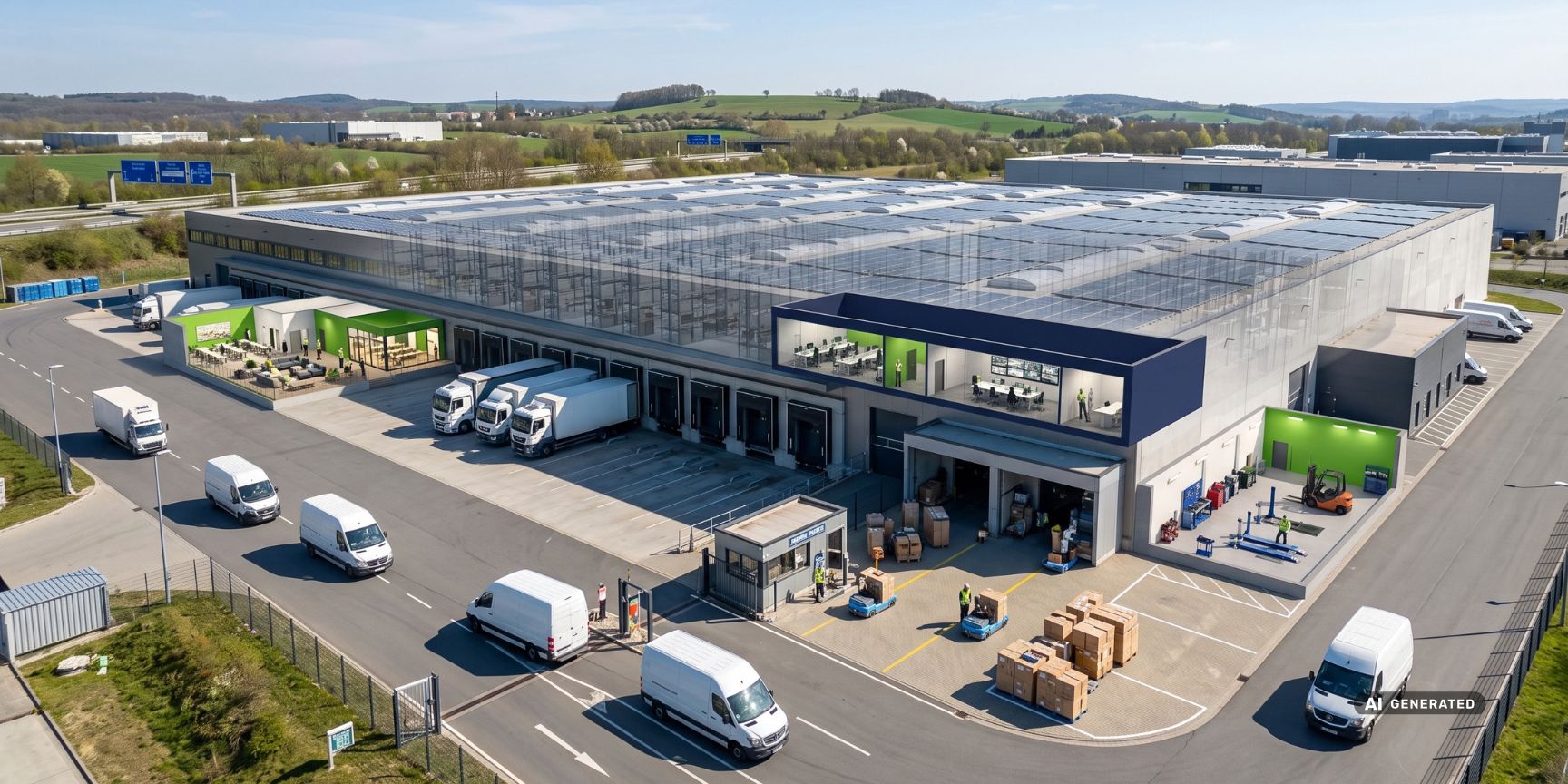
A returns hub (or returns center) is a specialized logistics property or a separate area within a hall that is designed exclusively for the processing of returns of goods (reverse logistics). In contrast to the classic fulfillment center, where the focus is on fast outbound goods, everything here revolves around the controlled receipt of goods (inbound), quality inspection, preparation and the rapid restocking or disposal of returned items.
E-commerce as a driver of reverse logistics
Germany is the European champion in retourism. Especially in fashion logistics (fashion and textiles), the return rates are often between 40 and 50 percent. But returns are also rising rapidly in the consumer electronics and home & living sectors. Every returned item blocks tied up capital. The goal of a returns hub is therefore to drastically reduce the return time so that the item is available again as "A-goods" in the online shop as quickly as possible.
Architecture and Logistics Property: Specific Requirements
A returns hub places completely different structural requirements on a commercial property than a classic pallet warehouse. While the clear hall height (UKB) and the floor load capacity (often > 50 kN/m²) are decisive for heavy high racks, returns management focuses on people.
- Lighting and ergonomics: For small-scale quality control (e.g. the search for stains on textiles), excellent, glare-free LED lighting (often 300 to 500 lux at the workstations) is absolutely necessary.
- Mezzanine spaces: Since returns are very labour-intensive, multi-storey mezzanines are often built into the hall to maximise the space for hundreds of manual inspection workstations.
- Social rooms and heating: The high number of employees requires above-average social rooms, parking spaces and high-performance hall heating, as people work stationary rather than machines.
Contract logistics: The outsourcing model of choice
Returns management is the most personnel-intensive and complex part of the supply chain. Many online retailers therefore outsource this "pain point" to experienced service providers in contract logistics. These operators of multi-user warehouses bundle the returns of different customers in regional or central hubs (often strategically located in the middle of Germany, e.g. in the Kassel or Bad Hersfeld region). This reduces fixed costs for the retailer, as they usually bill according to a variable "pay-per-return" model (transaction fees).
Value Added Services (VAS) in the Returns Center
In contract logistics, the service provider not only takes care of storage in the returns hub, but also essential value-added services. These include:
- Refurbishment: Professional cleaning, ironing (e.g. by tunnel finishers on clothing) or resetting electronic items to factory settings.
- Repacking: Replacing damaged original packaging and reprinting barcodes.
- Classification: The strict separation into A, B or C goods and the introduction of corresponding secondary market strategies (B-stock sales or recycling).
Automation and AI in the returns hub
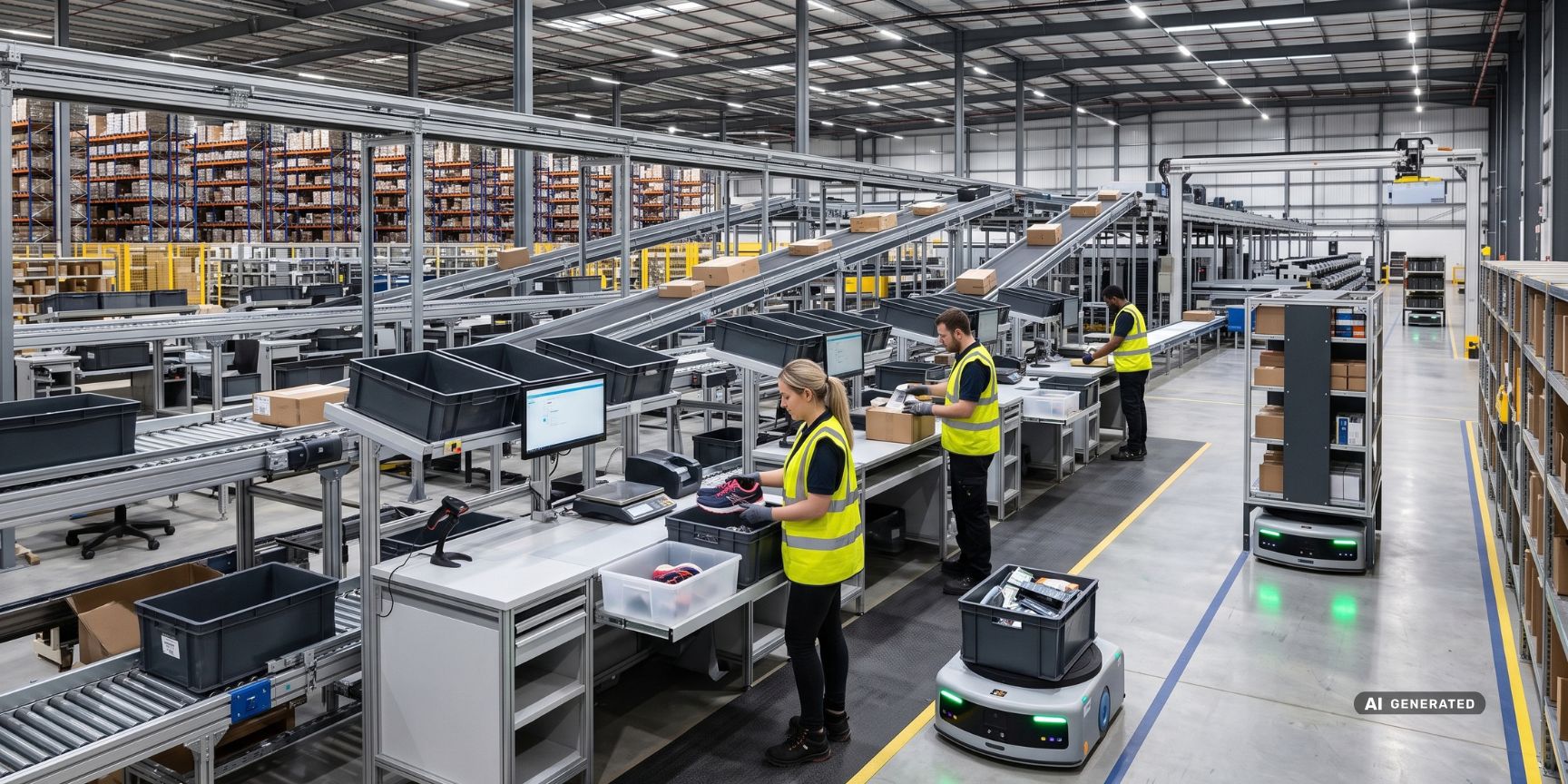
Although the inspection of goods remains highly manual, digitization is finding its way into the hall. Artificial intelligence (AI) now helps to predict returns in advance (predictive analytics). In the hub itself, autonomous mobile robots (AMR) take over the transport of the clothes racks or boxes from the inspection stations back to the warehouse. Smart camera systems (computer vision) scan items in milliseconds and independently detect scratches on displays or cracks in packaging.
ESG and sustainability: Returns hubs as green hubs
With the introduction of the Corporate Sustainability Reporting Directive (CSRD), sustainability is coming into focus. Returns hubs prevent valuable products from being destroyed. Modern logistics properties for returns management also rely on ESG criteria: photovoltaic systems on the huge hall roofs cover the high electricity requirements of the sorting systems and lighting, while heat pumps ensure climate-neutral working conditions.
Facts, figures, data: Returns at a glance
To underpin the relevance, here are some practical facts:
- Costs per return: An average return costs the online retailer in the DACH region between 10 and 15 euros, including postage, inspection and depreciation.
- Resource use: An efficient returns hub manages to make over 95% of the returned goods saleable again as A-goods within 48 hours.
- Personnel requirements: Compared to a highly automated pallet warehouse, a returns hub often requires three to five times the amount of personnel per 1,000 square meters of warehouse space.
FAQ: Frequently asked questions about returns hubs
Question: Why are returns hubs often spatially separated from the main warehouse (fulfillment center)?
Answer: Because the processes are contradictory. The main warehouse is trimmed for speed and mass in outbound goods. However, returns require meticulous checking, plenty of space for unforeseen items and special machines (laundry, ironing stations). Mixing would disrupt the fast shipping flow.
Question: Which regions in Germany are geographically best suited for returns hubs?
Answer: The best locations are geo-optimized in the middle of Germany (e.g. the logistics cluster of North Hesse, Erfurt or the Ruhr area). Here, the so-called "last mile" is on average the shortest for all German end consumers, which minimizes the return costs of parcel service providers (CEP).
Question: At what point does outsourcing to a contract logistics provider pay off?
Answer: A rule of thumb is that as soon as the volume of returns ties up one's own storage capacities to such an extent that regular day-to-day business (shipping) suffers, or when the costs for reprocessing (personnel, special machines) eat up the margin, a specialized 3PL service provider (third-party logistics) makes economic sense.
Your Ideal Logistics Warehouse
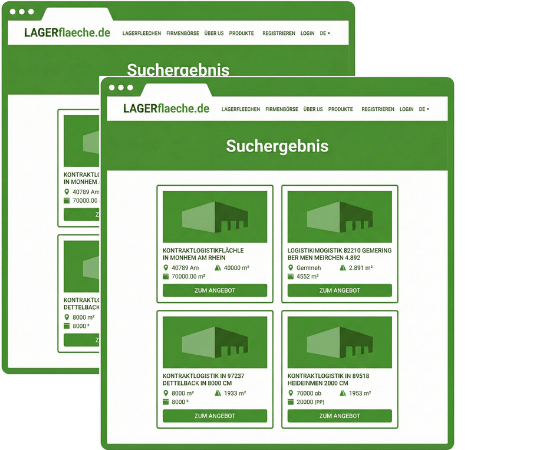
Browse listings for warehouse space, logistics real estate, industrial land, and contract logistics solutions.
Browse Exposés
Maximize Exposure for Your Warehouse Space
Showcase your logistics properties and attract qualified inquiries.
Discover Products