




Batch Tracking in Logistics
Table of contents
- Batch Tracking (Traceability)
- What is Batch Tracking? (Lexicon Definition)
- Why is batch tracking indispensable in warehouse logistics?
- The logistics property: structural requirements for traceability
- Contract logistics: Batch management as a value-added service
- The Digital Nervous System: WMS, Barcodes and RFID
- Figures, data, facts: The measurable ROI
- Industry-specific requirements (GEO & Compliance)
- Frequently Asked Questions (FAQ) on Batch Tracking
Batch Tracking (Traceability)
In a globalized supply chain, transparency is no longer a luxury, but a legal and economic matter of survival. When products are defective, every second counts. This is exactly where batch tracking comes in. This guide takes a deep look at the topic from the perspective of warehouse logistics, shows the requirements for modern logistics real estate and explains why contract logistics companies have no chance today without smart traceability concepts.
What is Batch Tracking? (Lexicon Definition)
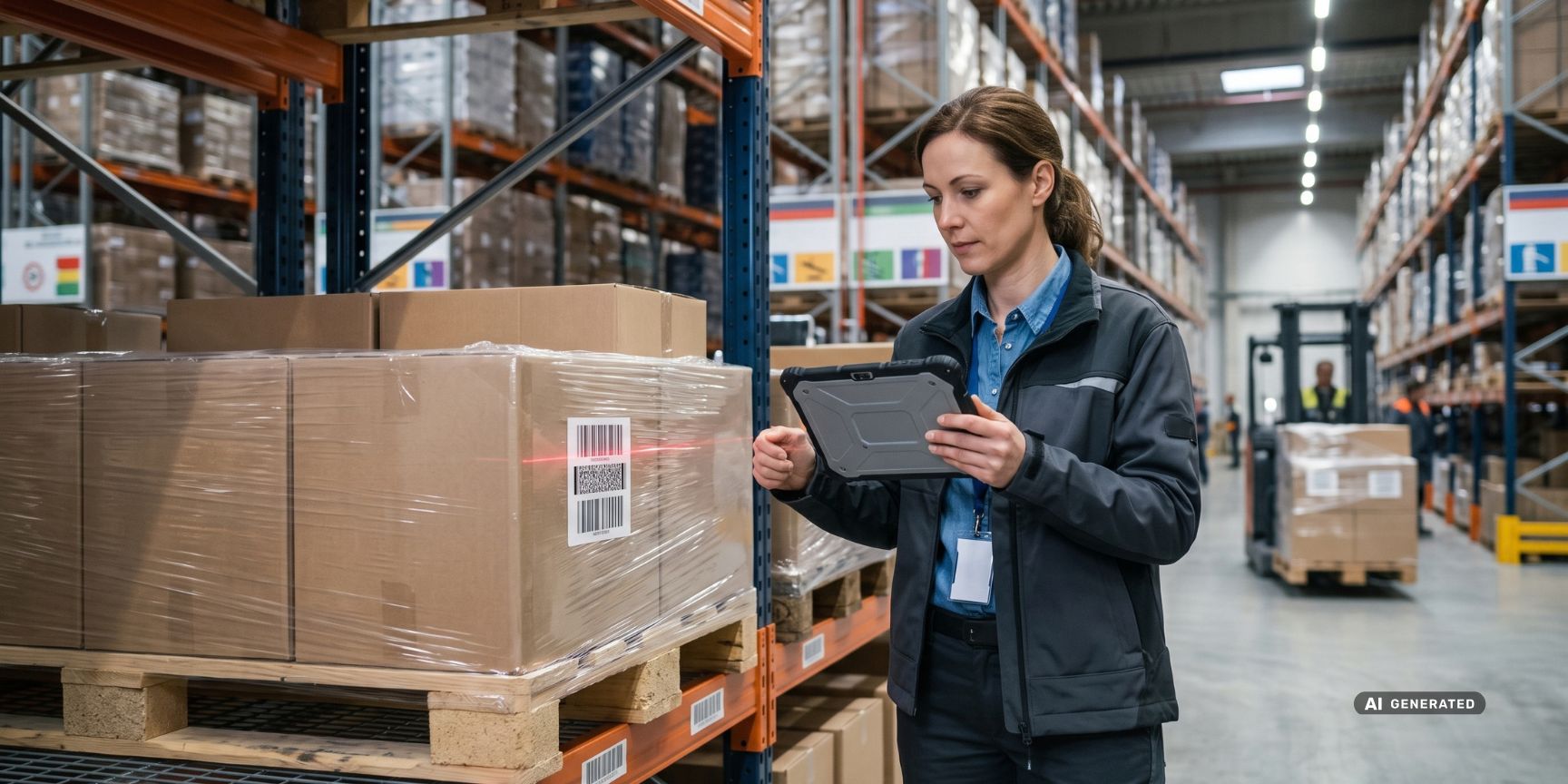
Batch tracking is the systematic process in which the origin, current location and whereabouts of goods are seamlessly documented using a specific batch number. A batch (or lot) includes all products that have been produced or packaged under identical conditions.
The goal is bidirectional traceability:
- Downstream (tracking): Where was the Charge X delivered to which customer?
- Upstream (tracing): Which raw materials from which suppliers are the finished product Y made of?
Why is batch tracking indispensable in warehouse logistics?
Intralogistics is no longer just about moving pallets. Batch tracking is the foundation for effective risk management. If quality defects occur, exact documentation in the warehouse center enables a targeted product recall. Instead of having to destroy or recall the entire inventory, the error can be limited to a specific pallet or row.
In addition, the batch number controls important storage strategies: In conjunction with the best-before date (BBD), it regulates the FEFO principle (First Expired – First Out). The system ensures that the batch that expires first is also the first to leave the commercial property. This drastically minimizes shrinkage caused by expired goods.
The logistics property: structural requirements for traceability
The best software is of little use if the physical shell – the logistics property – limits the processes. Seamless batch tracking places tough infrastructural demands on the hall:
- Seamless connectivity (WLAN/5G): Every scan of a batch must be transmitted to the server in real time. Reinforced concrete walls or dense high-bay systems in old existing buildings often shield signals. Modern industrial properties require 100 percent network coverage (access points) or a dedicated 5G campus network.
- Specific zone planning: In the event of a recall, the affected batch must be physically isolated immediately. The hall layout must have separate restricted storage zones (quarantine areas), which are often secured by grids or access controls.
- Air conditioning and sensor integration: In multi-temp halls, the batch number is directly linked to the temperature data of the logistics property (condition monitoring). This makes it possible to prove that the cold chain for batch XYZ has never been interrupted.
Contract logistics: Batch management as a value-added service
For manufacturing companies or large retailers, the handling of tens of thousands of batches is extremely resource-intensive. Therefore, they are increasingly outsourcing these processes to specialized contract logistics companies.
In contract logistics, batch management is an essential value-added service (VAS). Service providers contractually guarantee (via service level agreements - SLA) that each batch is documented exactly according to customer requirements, repackaged (kitting) if necessary and provided with country-specific labels. For the contract logistics provider, this means higher transaction fees (pick rates) and stronger customer loyalty, but requires absolute process reliability.
The Digital Nervous System: WMS, Barcodes and RFID
Managing batches requires powerful IT. A state-of-the-art warehouse management system (WMS) acts as the digital brain of the site solution.
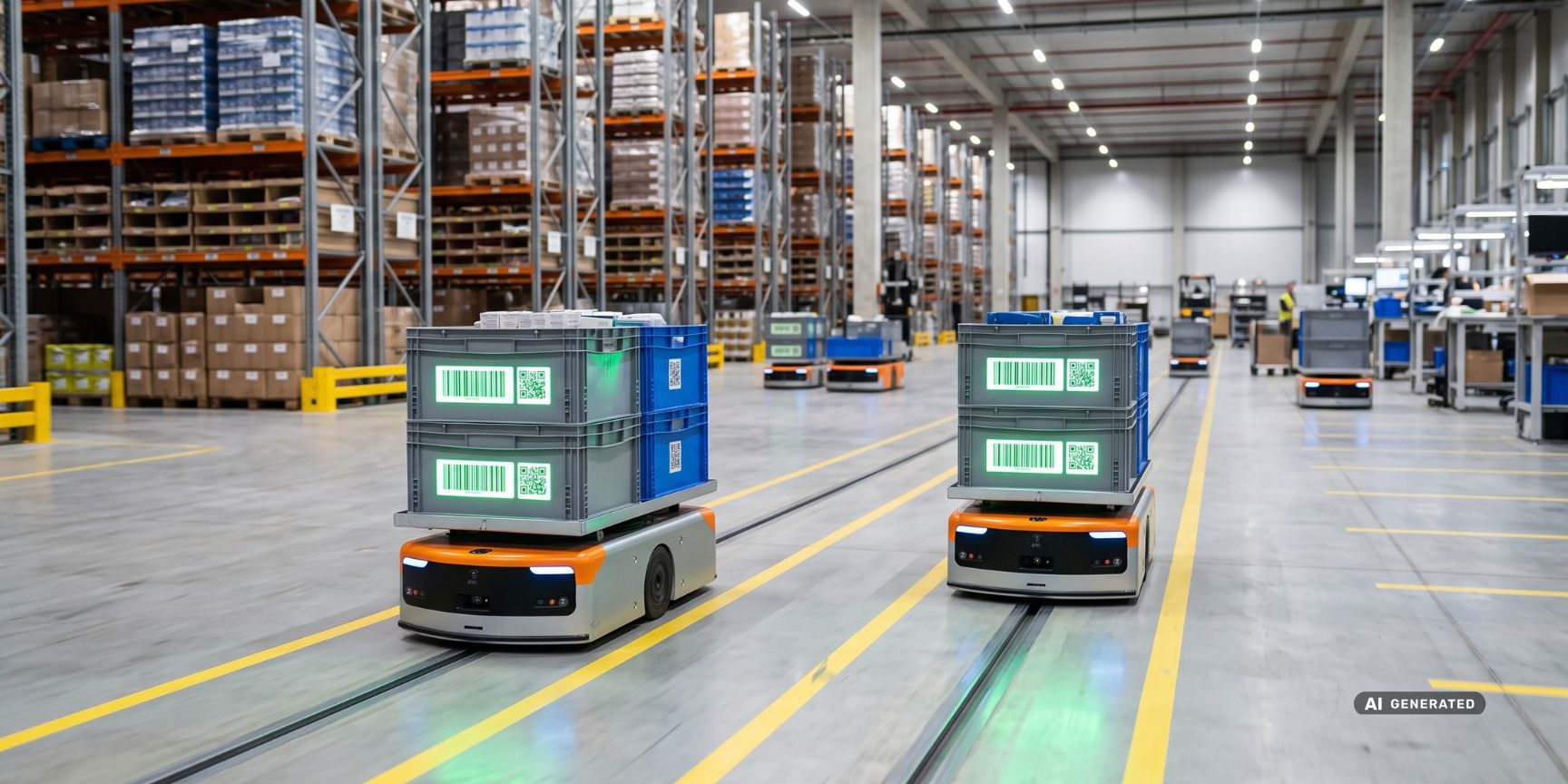
Identification is carried out via standardized data carriers such as the GS1-128 barcode. In addition to the EAN (article number) through so-called Application Identifiers (AI), this code also contains the best-before date, the weight and the batch number (AI 10). RFID technology is increasingly being used in highly automated fulfillment solutions . Here, the pallet passes through an RFID gate (scanner gate) in the outgoing goods department, and the batches of hundreds of items are booked simultaneously and contactlessly (bulk reading) in the system.
Figures, data, facts: The measurable ROI
- Costs of a recall: According to studies by the industry association Bitkom and various insurers, erroneous recalls in the food or pharmaceutical industry quickly cost millions. The direct isolation of a single batch often reduces these costs by up to 80 to 90%.
- Error rate: The manual entry of batches on paper lists has an error rate of approx. 1 to 3 %. The use of WMS and hand scanners in the hall reduces this rate to less than 0.1 %.
Industry-specific requirements (GEO & Compliance)
The requirements for batch tracking vary massively depending on the industry and geography. Especially in Germany and Europe, extremely strict laws apply:
- Pharmaceutical logistics: The GDP guideline (Good Distribution Practice) applies here. Every step of a batch of medicines must be safe from counterfeiting (FMD - Falsified Medicines Directive).
- Food logistics: EU Regulation 178/2002 makes traceability for food products a legal obligation. The HACCP concept (Hazard Analysis and Critical Control Points) requires uncompromising transparency here.
Frequently Asked Questions (FAQ) on Batch Tracking
Does every company in logistics have to track batches? Answer: This is legally mandatory, especially for industries such as pharmaceuticals, food, cosmetics and automotive (safety-relevant components). But companies also voluntarily rely on it in the e-commerce and consumer sectors in order to better manage returns and protect their brand image in the event of recalls.
What is the difference between batch tracking and serial number tracking? Answer: A batch includes many identical items that have been produced together (e.g., 10,000 bottles of shampoo from a cauldron). A serial number is completely unique and identifies a single, specific product (e.g., a single smartphone or VIN number).
How does the batch obligation affect storage costs (OPEX)? Answer: In the short term, it increases transaction costs (pick rates), as employees have to scan or verify the batches when goods are received and outgoing (scanning verification). In the long term, however, it drastically reduces operating costs by minimizing shrinkage due to expired goods and preventing expensive total recalls.
Your Ideal Logistics Warehouse
Browse listings for warehouse space, logistics real estate, industrial land, and contract logistics solutions.
Browse Exposés
Maximize Exposure for Your Warehouse Space
Showcase your logistics properties and attract qualified inquiries.
Discover Products