



Resilience in Logistics
Table of contents
- Was ist ein Gewerbemakler für Logistikimmobilien?
- Die Kernaufgaben in der Logistikimmobilien-Vermittlung
- Wandel des Berufsbilds: Vom Vermittler zum strategischen Berater
- Wer nutzt die Dienste eines spezialisierten Maklers?
- Der konkrete Mehrwert: Warum ein Gewerbemakler unverzichtbar ist
- Was kostet ein Gewerbemakler? Die Maklerprovision erklärt
- Zukunftsaussichten: Digitalisierung und Nachhaltigkeit als Treiber
- Sustainability and Energy Efficiency in the Modern Warehouse
- What are the security aspects of a warehouse?
Resilience in Logistics: The Guide to a Crisis-Proof Supply Chain
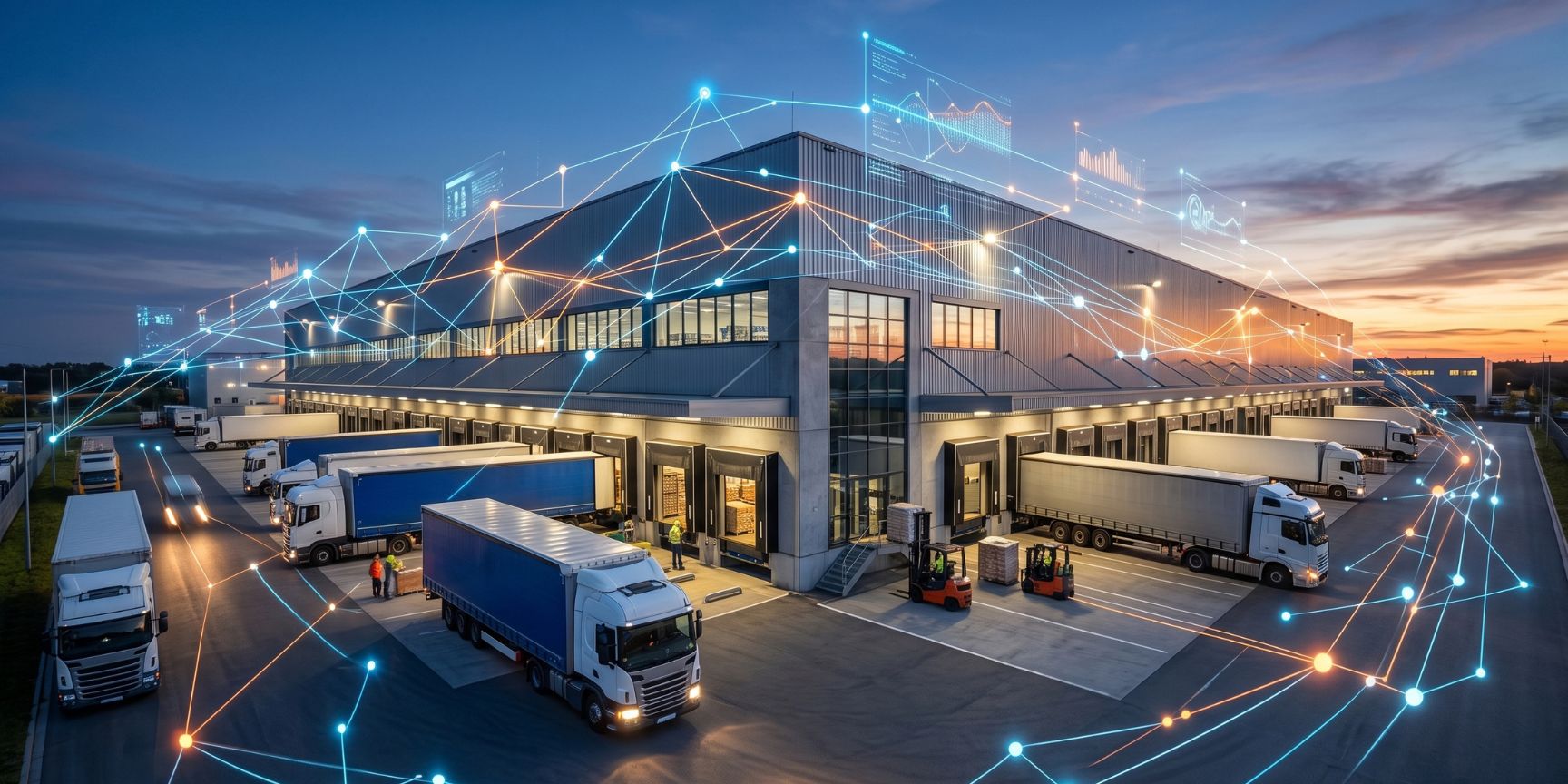
Global supply chains are under constant stress testing. Pandemics, geopolitical tensions, blocked sea and trade routes as well as unpredictable weather extremes have fundamentally changed the paradigm of modern intralogistics. Where pure cost minimization and strict "just-in-time" strategies used to dominate, a new mantra now rules: resilience. But what does this term mean in concrete terms for warehouse logistics, and what must logistics properties and halls be designed to offer real crisis protection? This guide examines the resilient supply chain of the future.
What is resilience in logistics? (Definition)
Resilience in logistics describes the structural and strategic ability of a supply chain to withstand unforeseeable disruptions, cushion them and return to smooth normal operations as quickly as possible. It is the proactive alternative to pure efficiency maximization. While lean supply chains tear at the slightest interruption (out-of-stock), a resilient system acts like a shock absorber. This requires flexibility in processes, redundant systems and, above all, clever strategies in physical warehousing.
Warehouse logistics: The strategic buffer stock
In operational warehouse logistics, resilience is inextricably linked to the build-up of reserve stocks. The strategic shift from "just-in-time" to "just-in-case" means that inventories (safety stock) are increased in a targeted manner to bridge supply bottlenecks from suppliers. This move away from minimal inventories requires highly intelligent inventory management. Through a clean ABC analysis, critical A-items (fast-moving items with a high impact on production capability) are stored in larger quantities. Although this increases capital commitment and the storage interest rate in the short term, it protects against the ultimate economic damage: the standstill of production or the loss of end customers.
Contract logistics as a resilience lever
Not every company can or wants to build its own mega-hubs to prevent crises. This is where contract logistics becomes a decisive factor. Outsourcing to a specialized logistics service provider (3PL) offers immense flexibility. In so-called multi-user warehouses, the service provider divides personnel, industrial trucks and technology among different customers. If a customer's supply chain collapses, the staff can be immediately deployed to a client with strong seasonal peaks (e.g. e-commerce). Transaction-based contracts (pay-per-pallet) also ensure that companies convert their fixed costs (CAPEX) into variable operating costs (OPEX), which massively strengthens financial resilience in economically uncertain times.
The logistics property: Structural requirements for the hall
A resilient supply chain fails when the physical shell – the logistics property – fails. The hall itself must be crisis-proof. This applies to both the layout and the statics:
- Third-party usability: Modern halls must remain flexible. Modular grid systems and the lack of rigid fixtures make it possible to quickly convert from block storage to shelving racks when market conditions change.
- Structural parameters: In order to map buffer stocks economically, ceiling heights of 10 to 12 metres lower edge truss (UKB) are now standard. The floor load capacity must be at least 50 kN/m² (approx. 5 tonnes) in order to safely support heavy high racks for long-term storage.
- Energy resilience (ESG): A hall that stands still in the event of a power outage is worthless. Comprehensive photovoltaic systems on the hall roofs in combination with battery storage systems make logistics centers increasingly energy self-sufficient and protect against price shocks on the electricity market.
Decentralized GEO networks instead of single point of failure
Concentrating on a single gigantic central warehouse is a fatal risk in times of crisis. Modern logistics planning relies on GEO-optimized, decentralized networks. The risk is spread by distributing inventories across several smaller regional hubs (nearshoring) in strategically secure areas such as the DACH region (e.g. hubs in North Rhine-Westphalia or Central Germany). If one hall fails due to weather conditions or strikes, the other locations can temporarily absorb the distribution.
IT and automation: The nervous system
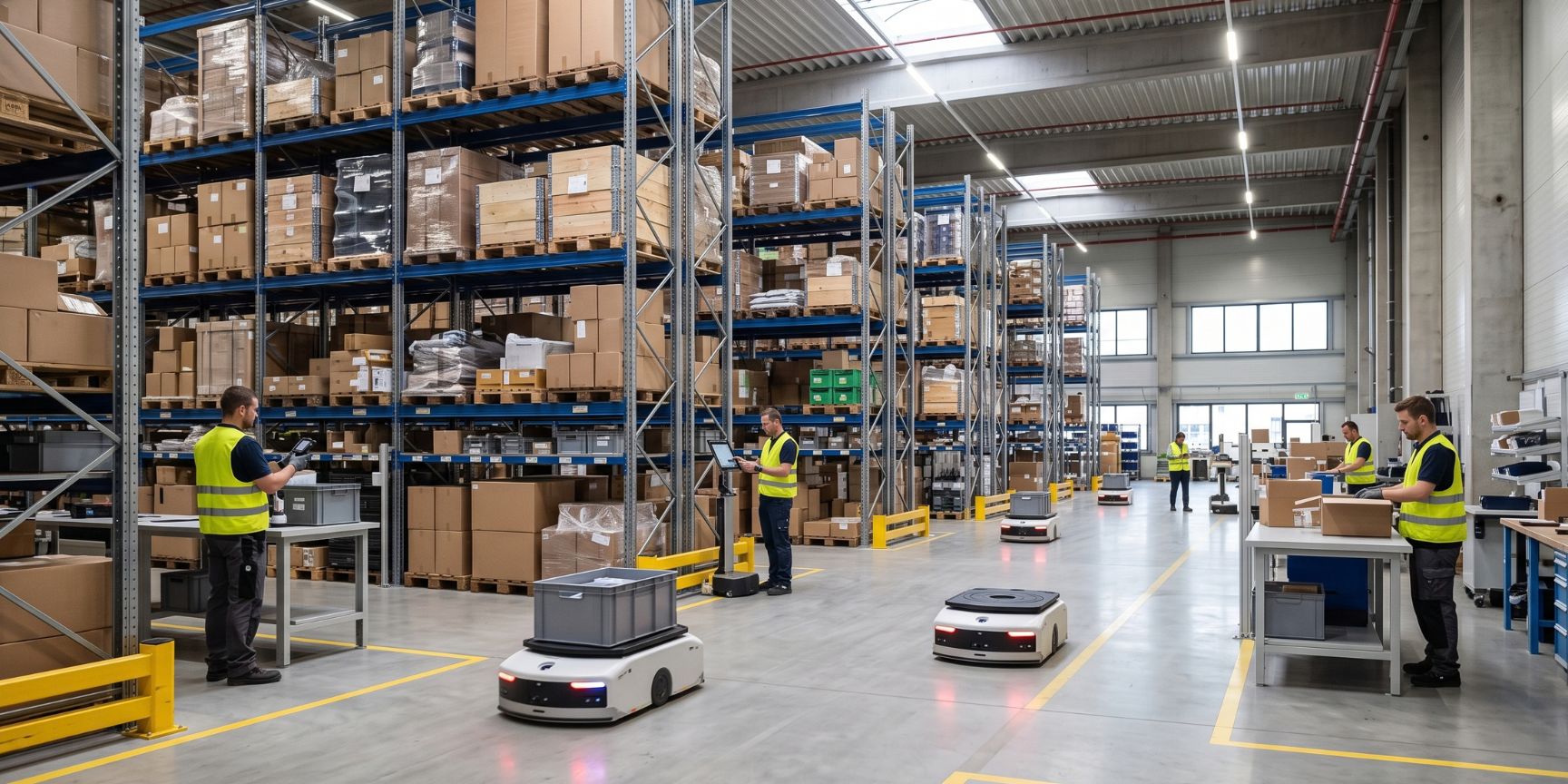
Physical buffers alone are not enough; transparency is the hardest currency of resilience. A powerful warehouse management system (WMS), ideally cloud-based, must provide real-time data. When autonomous mobile robots (AMR) and predictive analytics (AI-supported predictions) are used in the hall, bottlenecks can be predicted before they physically occur. The hall becomes an agile, learning organism.
FAQ: Frequently asked questions about resilience in logistics
- What is the difference between agility and resilience? Agility is the ability of a logistics chain to quickly adapt to new customer requests or short-term trends (e.g. through rapid picking). Resilience, on the other hand, is the fundamental resilience and tenacity to survive massive crises and disruptions at its core.
- Does resilient warehouse logistics cause higher costs? Yes, strategic resilience initially costs money (OPEX for more storage space and capital commitment costs for higher inventories). However, these costs should be regarded as an insurance premium: In an emergency, they are always far cheaper than production losses or massive contractual penalties due to delivery delays.
- How does contract logistics help with extreme fluctuations in demand? Contract logistics companies offer scalability. Thanks to flexible service level agreements and the use of multi-user centers, the service provider can increase space and staff at short notice in the event of sudden order peaks without having to rent your own halls.
- What key performance indicators (KPIs) measure logistics resilience? A central KPI is the Time-to-Survive (TTS). It indicates how many days a production or trading company can operate with the stocks in its own hall if the external supply breaks down completely.
- Can an older logistics property (brownfield) be resilient? To a certain extent. Older halls often have limitations (e.g. low ceiling heights of less than 10 meters or inadequate IT cabling). For real resilience, existing properties often need to be comprehensively revitalized and renovated to ensure reliability.
- Why is the energy label of a hall crucial for resilience? When energy prices explode, logistics service providers with poorly insulated properties get into trouble. A hall built according to ESG criteria with heat pumps and its own power supply cushions external price shocks and thus secures margins.
- How does AI improve warehouse reliability? Artificial intelligence analyzes historical data, weather reports and global transport routes in real time. It detects anomalies immediately and proactively warns the warehouse management system (WMS). In this way, safety stocks can be redirected to the appropriate regional logistics halls even before a crisis breaks out.
Your Ideal Logistics Warehouse
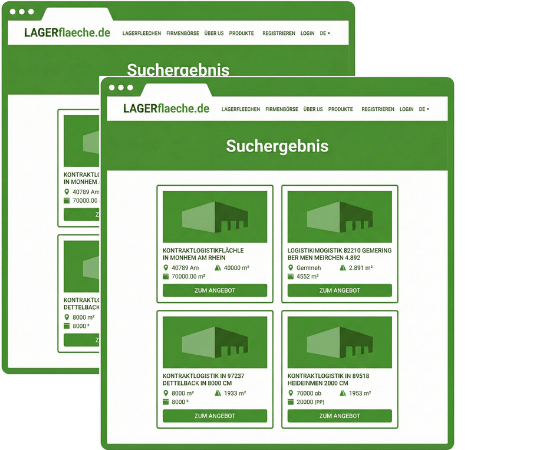
Browse listings for warehouse space, logistics real estate, industrial land, and contract logistics solutions.
Browse Exposés
Maximize Exposure for Your Warehouse Space
Showcase your logistics properties and attract qualified inquiries.
Discover Products