


The German Logistics Market: Who Is Leasing the Large Logistics Spaces?
Table of Contents
- The Status Quo: How Many Logistics Properties are there in Germany?
- The Distribution of Sectors: Who Occupies the Areas?
- Specialization vs. Flexibility: Dedicated vs. Multi-User
- Use of the Property vs. Service Provider Operation
- Build-to-Suit (BTS): Tailor-made Suit for Logistics
- International Comparison: Germany vs. USA, UK and Poland
- Practical Example: The Transformation of a Location
- Conclusion: The Evolution of the Surface
Have you ever asked yourself when driving past the huge "grey boxes" along the motorways: What exactly happens in there – and who owns all this stuff? In a world where "Next Day Delivery" is the standard and supply chains need to become more resilient, logistics real estate is much more than just warehouses. They are highly complex process centers.
But who are the actors who claim these areas? Is it traditional retail, the booming e-commerce industry or the crisis-ridden automotive industry? In this deep dive, we analyze the structure of the German logistics market, compare it with international standards and take a look behind the scenes of build-to-suit and multi-user concepts.
The core questions of this analysis:
- Which sectors are driving take-up the most?
- What is the relationship between e-fulfillment, food and industry?
- Are specialized "dedicated" halls or flexible multi-user centers the future?
- How does Germany fare in an international comparison?
The Status Quo: How Many Logistics Properties are there in Germany?
Due to its central location in Europe, Germany is considered the logistics hub par excellence. However, quantifying the exact number of halls is a methodological challenge, as the definitions (from what size does a building count as a logistics property?) vary.
According to data from Bulwiengesa and the Logistics Real Estate Initiative (Logix), there are an estimated 25,000 to 30,000 relevant logistics properties in Germany (from an area of approx. 2,500 m²). The total usable area is estimated at over 150 million square meters. Despite the shortage of space and interest rate turnaround, around 4 to 5 million square meters of new construction space are added every year.
Data check: Annual take-up in Germany has fluctuated between 6.5 and 8.5 million square meters in recent years (source: JLL/CBRE).
The Distribution of Sectors: Who Occupies the Areas?
The demand for logistics space is heterogeneous, but three main groups dominate the action. The distribution of take-up (new construction and existing buildings) is as follows on a long-term average:
A. Retail & E-commerce – approx. 35-40%
Retail is the undisputed leader. Here, however, we have to differentiate:
- Stationary trade: Classic central warehouses for supermarkets (food) or DIY stores.
- E-fulfillment: This has been the growth engine of the last decade. E-commerce giants such as Amazon, Zalando or Otto require significantly more space per euro sold than brick-and-mortar retail (factor 3), as returns management and individual item picking are extremely space-consuming.
B. Logistics Service Providers (3PL/4PL) – approx. 30-35%
Contract logistics companies such as DHL, Kuehne+Nagel or DB Schenker rent space to take over processes for their customers from industry and trade. They are often the bridge between the worlds.
C. Industry & Automotive – approx. 20-25%
Especially in the south and west of Germany, industry dominates. The automotive industry requires huge areas for spare parts logistics and production-related storage (just-in-time/just-in-sequence).
D. CEP Services (Courier, Express, Parcel) – approx. 5-10%
These usually use smaller "last-mile" transshipment points near the city. Although they make up many properties, they account for a smaller share of the overall market in terms of area.
Specialization vs. Flexibility: Dedicated vs. Multi-User
A central issue for investors and users is the hall configuration.
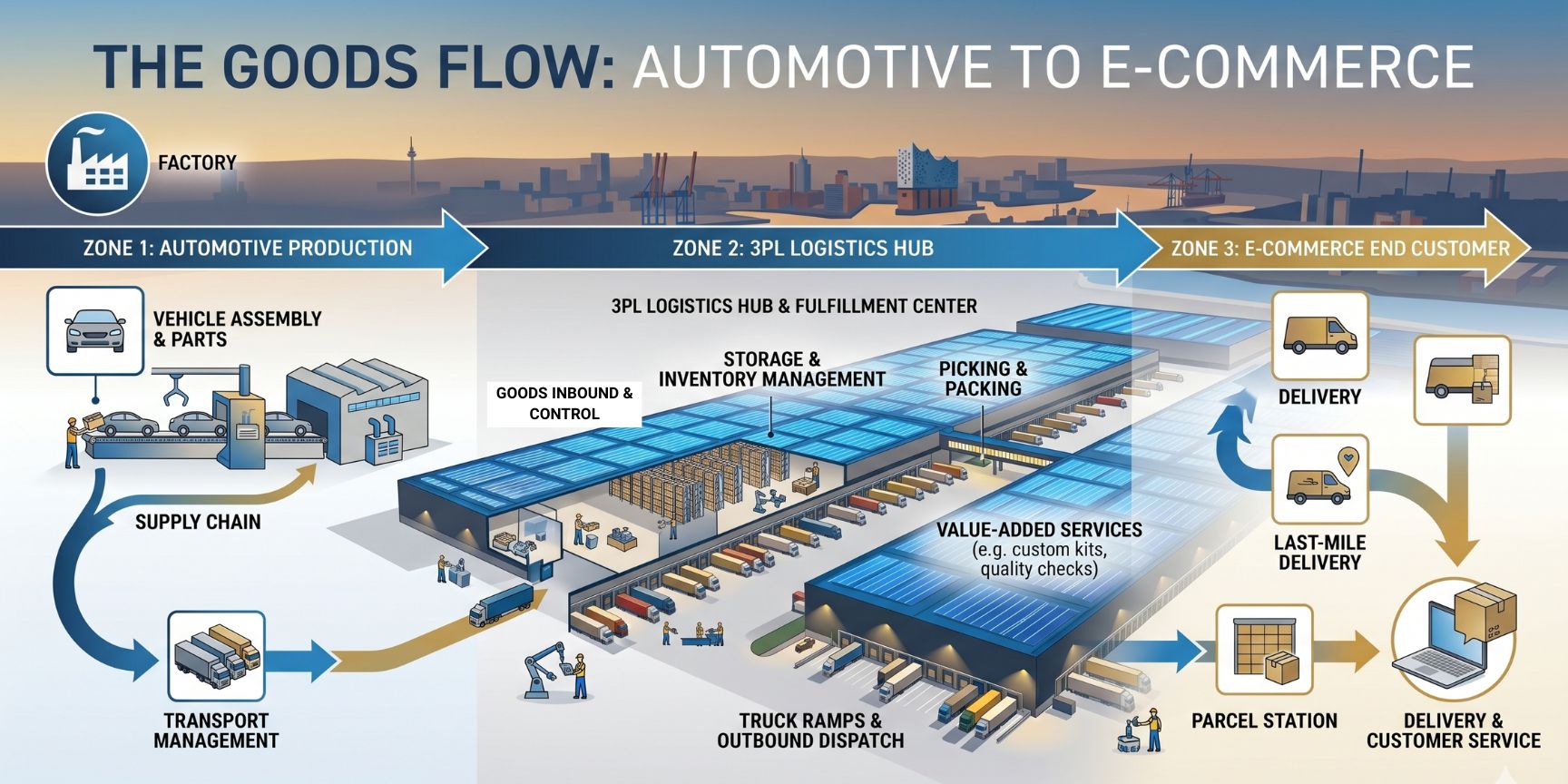
- Dedicated logistics properties: These are tailored to a single user and often to a specific process (e.g. a fully automated high-bay warehouse for frozen food). Advantage: Maximum efficiency. Disadvantage: Difficult to use for third parties.
- Multi-user logistics properties: These halls have a modular design. Several tenants share the infrastructure (offices, social rooms, courtyards). In Germany, this type accounts for about 40% of new buildings, as it minimizes the vacancy risk for investors.
The distribution: While large e-commerce players often prefer dedicated solutions (often as build-to-suit), medium-sized contract logistics companies are increasingly relying on multi-user spaces in order to be able to react flexibly to new business.
Use of the Property vs. Service Provider Operation
Who holds the key? The structure has shifted massively in the last 20 years.
- Owner-occupied: About 35-40% of the space is owned and operated by the companies themselves (especially in the food retail sector and DAX industry).
- Service provider operation (outsourced): Around 60-65% are managed by logistics service providers. The real estate often belongs to institutional investors (REITs, insurance companies, funds), while the logistics company acts as a tenant.
Build-to-Suit (BTS): Tailor-made Suit for Logistics
A significant proportion of the new buildings are being built as build-to-suit. This means that a project developer builds the hall exactly according to the specifications of the future tenant.
- Quota: In the field of large-scale logistics (> 20,000 m²), an estimated 70% of projects are BTS.
- Problem: These halls are often so special (e.g. special floor loads, hazardous goods storage, mezzanine levels) that they are difficult to adapt to new requirements.
- Adaptability: Only about 20-30% of the total stock in Germany is considered "highly flexible" in the sense of a rapid conversion for completely different industries without millions of euros in investment.
International Comparison: Germany vs. USA, UK and Poland
Why does the logistics landscape look so different in other countries?
| Country | Focus | Special feature compared to Germany |
| USA | Big Box & Intermodal | Gigantic clusters (e.g. Inland Empire). Areas are often much larger (> 100,000 m²) and simpler than in Germany. |
| UK | E-Commerce-Driven | Highest e-commerce penetration. Focus on extremely fast last-mile logistics and multi-level halls due to lack of space. |
| Poland | Cost Efficiency & Nearshoring | Strong growth due to German export logistics. More modern standards on average, as almost all new buildings are greenfield buildings. |
| Netherlands | Gateway Logistics | Focus on port logistics (Rotterdam). High density of specialized value-added service centers. |
The "German Standard": Compared to the USA, Germany has very strict fire protection and environmental requirements (DGNB/LEED certifications). This makes the halls more expensive, but also more durable and more stable in value than in many Eastern European countries.
Practical Example: The Transformation of a Location
Let's look at a fictitious but realistic example in the Ruhr area:
A former steelworks site (brownfield) is being revitalized. Originally planned as a dedicated hall for an automotive supplier, the developer opted for a multi-user concept.
- User 1: An e-fulfillment start-up (3,000 m²).
- User 2: A regional beverage logistics company (5,000 m²).
- User 3: A service provider for solar modules (10,000 m²).
This example shows the trend towards resilience: When the automotive economy weakens, the hall remains fully utilized due to the diversification of tenants. Such flexible spaces currently have the lowest vacancy rates (often below 2%).
Conclusion: The Evolution of the Surface
The question "Who fills the halls?" can no longer be answered with a single industry. It is the symbiosis of specialized contract logistics and highly flexible trading that dominates the market. While the automotive industry is stagnating, e-fulfillment continues to suck up space – even if growth has normalized after the pandemic.
For experts, this means that the focus is moving away from the pure number of square meters to the intelligence of the space. Third-party usability is the new gold. Anyone who builds a hall today that will not be suitable for a robot fleet or pharmaceutical logistics in ten years' time is missing the market.
Latest Blog Posts
Stay up to date with the newest trends, insights, and tips in warehouse and logistics. Our latest articles help you navigate the industry with confidence.
Data Centres vs. Logistics Facilities: The Race for Power and Land
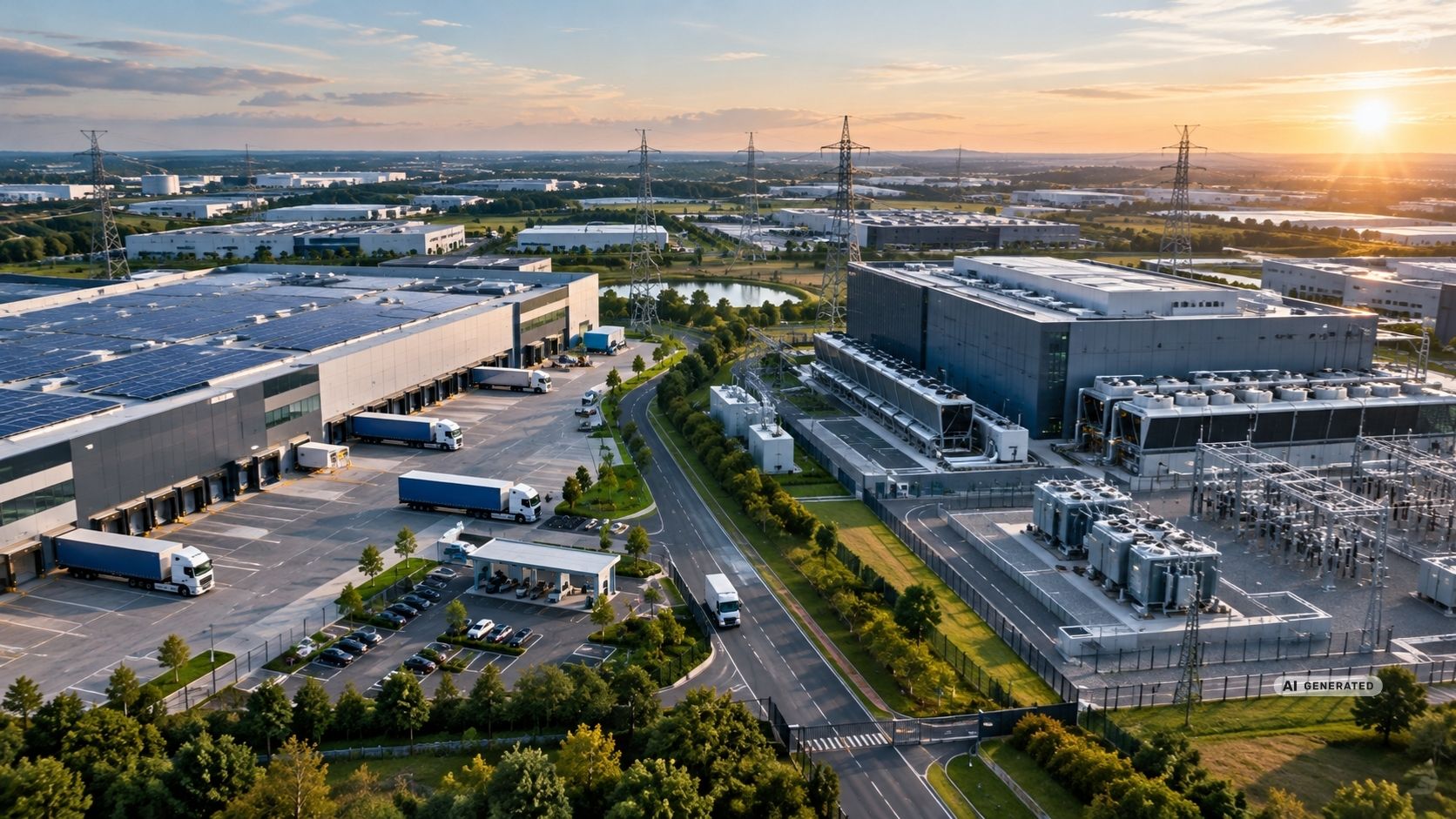
Across Europe, logistics operators are competing for more than land and transport access. They increasingly need something much harder to secure: grid capacity. Data centres are intensifying that competition — and changing how logistics locations are evaluated....
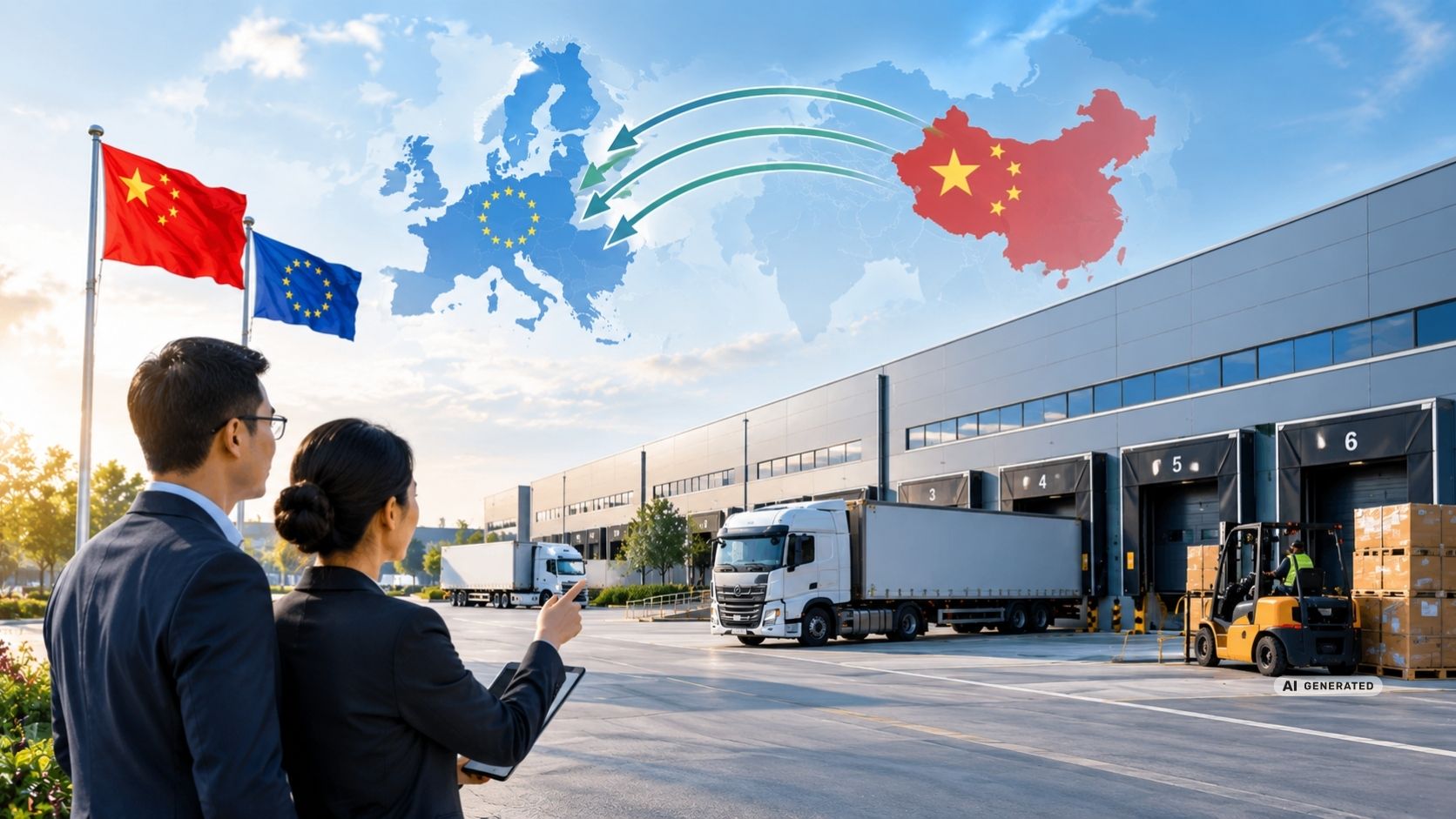
Chinese companies discover Europe's logistics real estate
Chinese companies are becoming an increasingly visible user group in Europe's logistics real estate market. What does this mean for warehouse space, 3PL structures and the requirements for European logistics locations?...
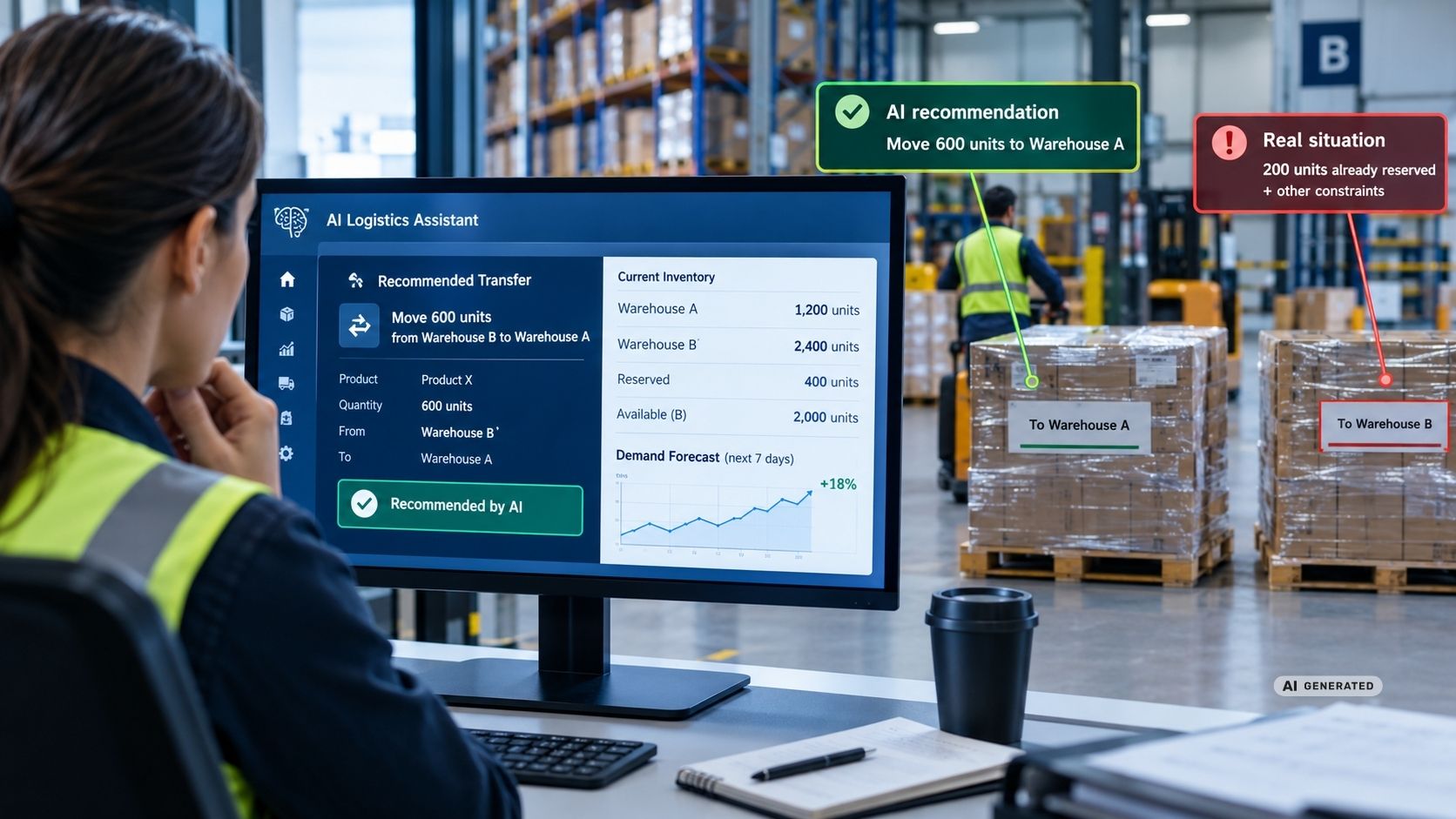
AI Hallucinations in Logistics: When AI Plans the Wrong Delivery
AI can analyze enormous amounts of logistics data — but it can also produce a convincing answer that is simply wrong. The critical question is not whether AI makes mistakes, but what happens when a wrong recommendation becomes an operational decision....
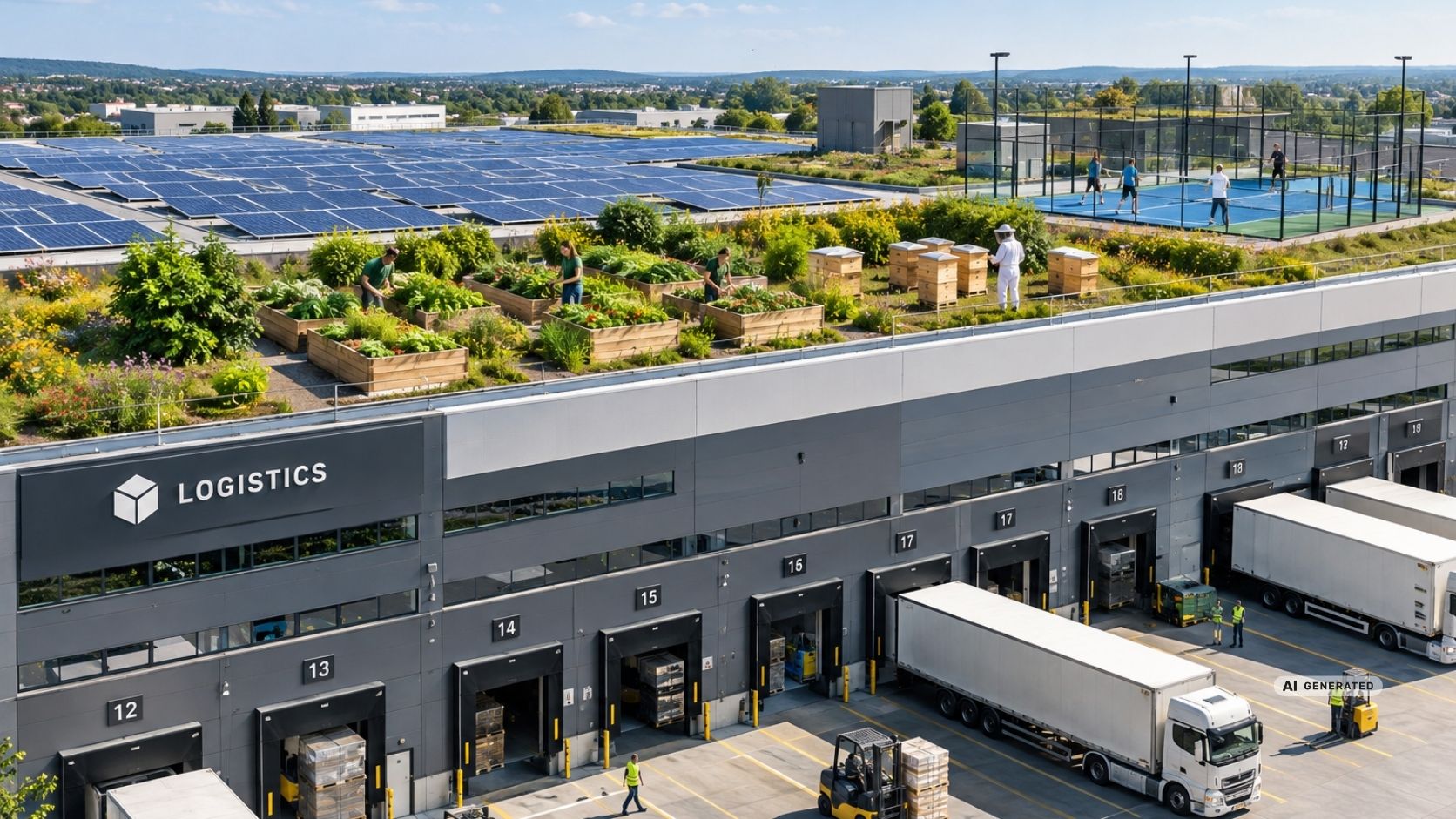
The Green Revolution on the Hall Roof: From Concrete Block to Ecological Power Plant?
Logistics roofs can do more than PV: greening, bees, urban farming and even sports areas turn unused roof space into multifunctional rooms....