




Automation leads to increasing demand for modern logistics space
A recent study has shown that 50 percent of modern logistics spaces are expected to be automated by 2035.
Düsseldorf, June 17, 2026 – According to a new study by Prologis, warehouse automation is driving demand for modern logistics space across Europe. The most important driver of this development is that building occupants are investing in technologies to improve their performance in markets with labor shortages and land shortages.
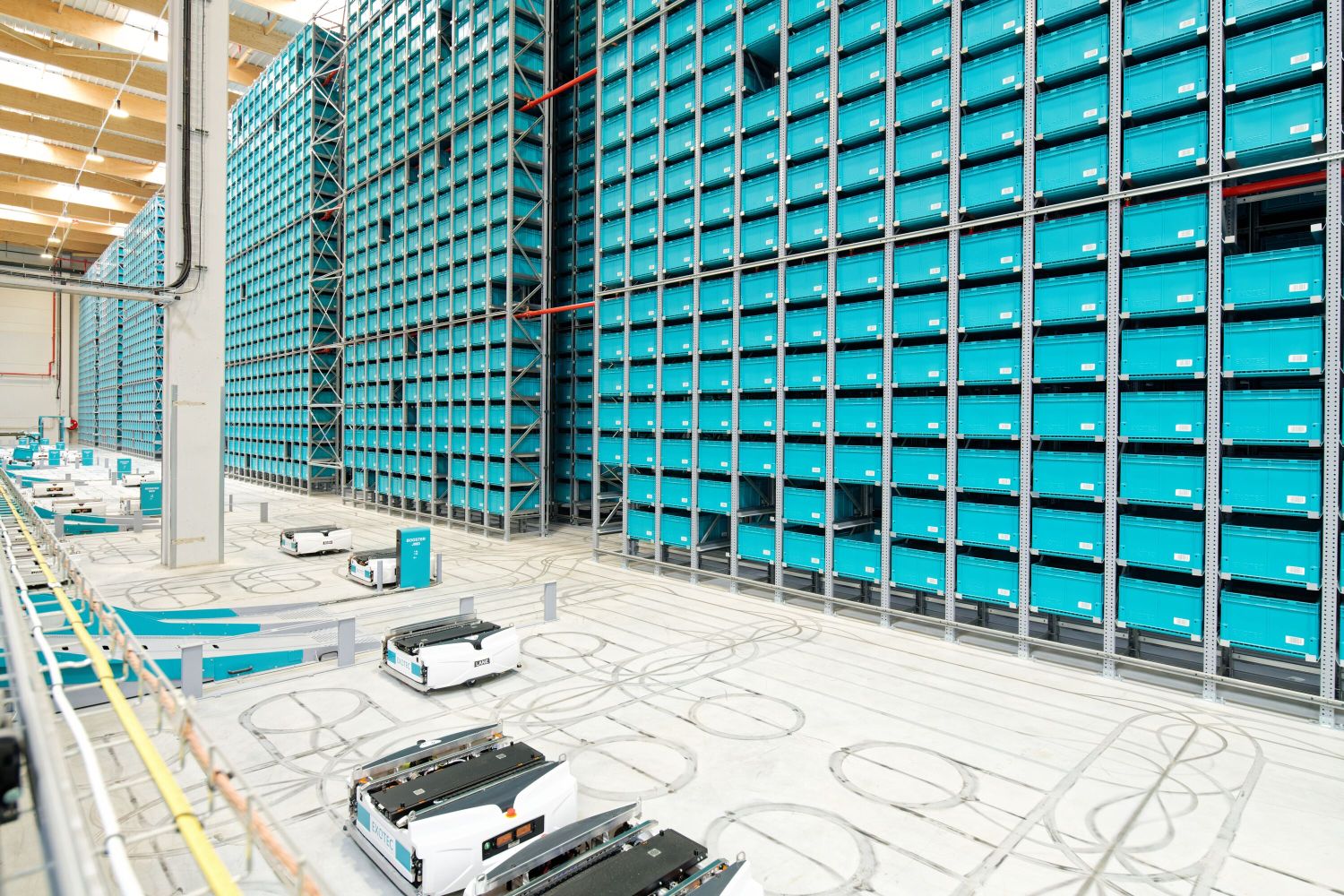
Automated logistics spaces like this one at Prologis Park Moissy are becoming increasingly important in the face of a shortage of labor and space. © ( Prologis)
Prologis' analysis showed that by 2025, around 30 percent of modern logistics spaces will be partially or fully automated. Five years ago, it was only 20 to 25 percent. Much of this growth is driven by flexible technologies such as autonomous mobile robots, automated guided vehicles, and other modular systems. These can be easily integrated into existing processes and are better suited for rented space than permanently installed, capital-intensive solutions.
In contrast, fully automated storage and retrieval systems are still relatively rare, using only about 3 to 5 percent of facilities. Although these systems offer significant efficiencies, high initial costs, limited flexibility, and special structural requirements continue to limit wider adoption.
In the area of logistics real estate, the results point to rising prices for buildings in which automation is possible. Data from Prologis shows that properties where customers use automation solutions are more likely to have a contract renewal increase by a double-digit percentage. In addition, the lease terms are about a year longer and the rents are 10 percent higher than for non-automated properties. These figures have already been adjusted for market and size factors.
The results are particularly relevant for Europe's busiest logistics markets, where labour shortages, land shortages and planning constraints are driving up the value of throughput per square metre. This also applies to central German logistics regions. In Prologis' German portfolio, the vacancy rate is just over 2 percent, and there is hardly any logistics space available at short notice. This makes efficiency increases on existing areas all the more important.
"In Europe, however, automation is no longer just about efficiency," says Matthias Brandl, Essentials Solutions Manager at Prologis. "It is increasingly about how users react to a tight labor market, a limited supply of space and rising customer expectations."
Analysis by Prologis suggests that by 2035, up to 50 percent of modern warehouses could be partially or fully automated. Flexible systems are expected to remain the most popular option. The relevance of automation is also confirmed by the Prologis Supply Chain Outlook 2026: 42 percent of German executives rank automation and robotics among their most important investment priorities for 2026.
"Especially in markets like Germany, where modern logistics space is in high demand and skilled workers remain in short supply, the automation capability of buildings is becoming an important location factor," adds Philipp Feige, Vice President, Head of Capital Deployment Germany at Prologis. "Our study shows that automation is increasing, not decreasing, the demand for modern logistics space in the right locations."
Media Contact
Maria Mateen
External Communications Manager Northern Europe, Prologis
mmateen@prologis.com
+31 20 655 1958
Torben Sachau
STROOMER Communications
torben.sachau@stroomer.de
040 853 133 292

Latest Warehouse News

REALOGIS: Large-scale spaces characterise Berlin's logistics real estate market – demand base remains stable
Total take-up in the first three quarters of 2026 at 332,000 m² + Hall turnover down 9% compared to the strong prior-year period + Prime and average rents stable at a high level + Existing properties were the type of property with the highest turnover + Logistics companies took up the most space...

NAGEL-GROUP puts new logistics site in Rostock into operation
The Nagel-Group is further expanding its logistics network in northern Germany and has moved into a new logistics property in VGP Park Rostock...

Logistics investment volume again exceeds € 4 billion
BNP Paribas Real Estate publishes market figures for Q3 2026...

Logix publishes new study on multilevel logistics real estate
Potentials, basic types and challenges at a glance + Typing creates the basis for future standards...