Commission-free offer
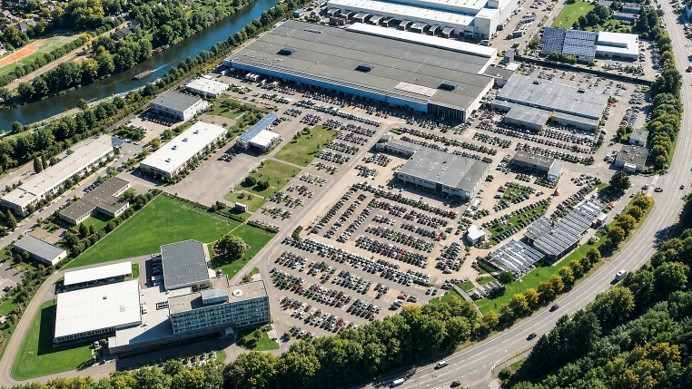
Lager- und Logistikfläche in Saarbrücken-Güdingen
Object no.: 10188
Contract logistics
Warehousing (warehouse with management)
Germany
66130 Saarbrücken-Güdingen
21.580 m²
3000 (PP)
Price on request

An efficient commercial warehouse is the operational backbone of any successful enterprise. Whether supporting rapid e-commerce growth, specialized manufacturing, or traditional B2B trade, choosing the right industrial real estate directly dictates your delivery speeds and cost structures. On LAGERflaeche.de, discover immediately available logistics locations, compare technical specs, and secure the ideal fulfillment solution for your business model. Optimize your inventory and make your supply chain resilient to disruption.
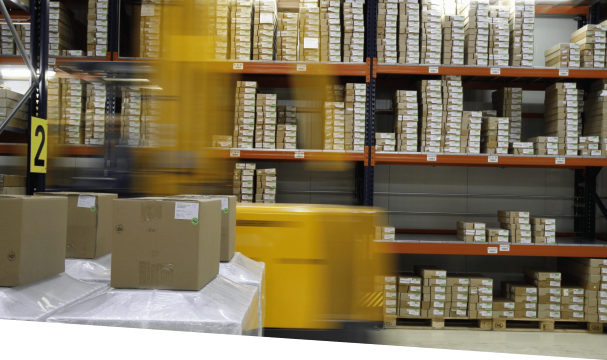
The industrial real estate market is dynamic and demands precise location scouting. On our search and matching platform, you can filter listings by critical specifications such as clear height, floor load capacity, or industry-specific safety standards. Find the perfect commercial warehouse for self-managed operations, or request tailored quotes for end-to-end solutions from certified third-party logistics (3PL) providers.
Object no.: 10188
Warehousing (warehouse with management)
Germany
66130 Saarbrücken-Güdingen
Price on request
» What is a Commercial Warehouse and Why is Location Critical?
» Architecture and Technical Requirements for Industrial Real Estate
» Operational Processes, Digitalization, and Legal Compliance
» Fulfillment Solutions, Outsourcing, and Value-Added Services
» Lease Models and Scalability for B2B Clients
» Frequently Asked Questions (FAQ) About Commercial Warehousing
A commercial warehouse encompasses all physical goods and the supporting infrastructure that serve as a strategic buffer between procurement, production, and sales. The facility acts as a central reservoir, ensuring that production lines remain operational and end customers receive shipments on schedule. As many businesses transition away from strictly just-in-time models back toward strategic safety stock, the global demand for modern industrial properties is increasing dramatically.
Inventory reach—the timeframe a business can operate without restocking—heavily dictates the architecture and overall budget of a distribution center. A well-positioned logistics node minimizes lead times and prevents costly operational bottlenecks.
The physical layout of a building either limits or unlocks the efficiency of your entire intralogistics system. When companies source modern logistics solutions, strict structural parameters must be met:
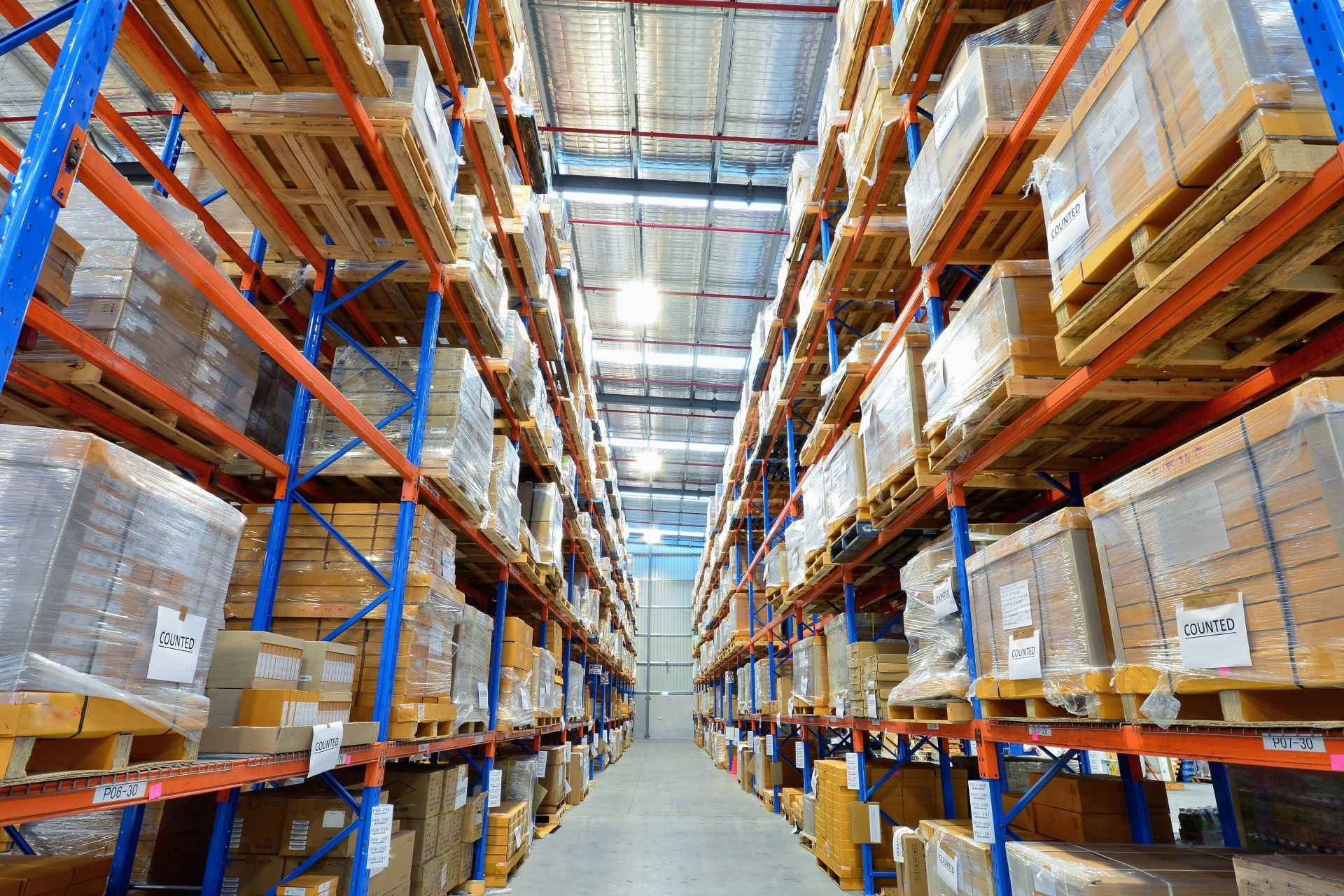
Modern operations inside a fulfillment hub are impossible without specialized IT infrastructure. A high-performance Warehouse Management System (WMS) controls the entire material flow. Every SKU is tracked via barcode scanners or RFID technology, put away using route-optimized algorithms, and seamlessly documented at outbound dispatch.
This digital footprint is essential for process optimization and mandatory for complying with statutory retention periods, batch tracking (expiration dates), and strict GDPR regulations. When connecting sensitive freight and customer data, cloud architectures and IT security protocols must operate without compromise.
An increasing number of companies are opting against the hands-on management of capital-intensive industrial facilities in favor of smart logistics outsourcing. Specialized fulfillment providers offer far more than just raw square footage.
Through integrated fulfillment solutions, they handle critical Value-Added Services (VAS). These include light assembly, labeling, quality control, kitting, and professional returns management. Businesses benefit from a flexible real estate footprint, transforming rigid fixed expenses into scalable operational costs while refocusing on their core business.
Avoid logistical bottlenecks, uneconomical leases and rigid layouts that slow down your supply chain. Secure the long-term competitiveness of your company through a strategically perfectly selected warehouse location. LAGERflaeche.de brings you directly together with real estate operators, owners and certified experts as a decision-making platform. Analyze technical parameters, compare immediately available warehouse objects and find the storage solution that will safely support the growth of your company.
Commercial lease models on the market are adapting to the flexible requirements of modern commerce. Two primary frameworks have established themselves:
Rental prices vary significantly depending on macro-location, building specifications, and local infrastructure. Basic, uninsulated cold storage setups often start around €4.50 to €5.50 per square meter. State-of-the-art, heated properties featuring dock levelers and high floor load capacities average between €6.00 and €8.50 per square meter. Specialized industry requirements, such as temperature control, will drive prices higher.
Direct transport connectivity is critical to success. Every kilometer away from highway interchanges, port facilities, or rail networks costs time and money. Furthermore, companies must calculate the Total Landed Costs—including freight and toll fees—since a seemingly cheap rental property in a remote area can quickly become inefficient due to longer transport routes.
Your SKU structure (product variety) dictates the ideal racking system. Small, unpalletized items and e-commerce assortments are best stored in flexible shelf racking units. Conversely, pallets with high product variety require narrow-aisle or high-bay racking systems to facilitate direct access (FIFO principle). Low-sensitivity bulk goods with minimal variety can be cost-effectively stacked in block storage layouts.
Outsourcing is particularly beneficial when business growth is difficult to forecast, severe seasonal peaks must be absorbed, or capital is required for investments in the core operating business (production/trade). By utilizing pay-per-use frameworks, fixed overheads can be successfully converted into predictable operational costs.